
****DEDICADA EXCLUSIVAMENTE A LA RADIOAFICION POR SATELITE DESDE VENEZUELA POR EL MUNDO Y PARA EL MUNDO Y A LA ****ENSEÑANZA Y DIVULGACION DEL AMBITO DIGITAL, SATELITAL Y LA ISS. GRUPO CREADO EL 26 DE DICIEMBRE DE 2009 EN YAHOO.GROUPS, PARA COMPARTIR CONOCIMIENTOS A LA RADIOAFICION. Autor: Manuel Mosquera Ramírez YV5MM Miembro del Radio Club Venezolano # 1347 desde el año 1970 y Asociación de Radioaficionados de Venezuela MIEMBRO PRINCIPAL desde el 18 de Mayo de 1970
lunes, 25 de noviembre de 2013


sábado, 23 de noviembre de 2013
viernes, 22 de noviembre de 2013
jueves, 21 de noviembre de 2013
miércoles, 20 de noviembre de 2013
martes, 19 de noviembre de 2013
lunes, 18 de noviembre de 2013
domingo, 20 de octubre de 2013


viernes, 18 de octubre de 2013
sábado, 21 de septiembre de 2013
viernes, 20 de septiembre de 2013
miércoles, 18 de septiembre de 2013
martes, 17 de septiembre de 2013
lunes, 2 de septiembre de 2013
domingo, 1 de septiembre de 2013


martes, 23 de julio de 2013
sábado, 13 de julio de 2013
domingo, 21 de octubre de 2012

lunes, 10 de septiembre de 2012
ISS AMATEUR RADIO CUBESAT DEPLOYMENT POSTPONED
ISS Amateur Radio CubeSat deployment postponed
JAXA have announced that the deployment of five CubeSats from the International Space Station (ISS) planned for September 10 has been postponed due to an additional EVA taking place September 5. A new deployment date has not yet been announced.Four of the CubeSats carry Amateur Radio payloads, they are F-1, FITSAT-1, WE-WISH and TechEdSat.
The small satellites, just 10cm cubed, were transported to the ISS in the HTV-3 cargo vessel that blasted off on an H-IIB rocket from the Tanegashima Space Center on Saturday, July 21 at 02:06 UT.
They arrived at the ISS on July 27 and were unloaded by the Expedition 32 crew.
The CubeSats are mounted in a JEM-Small Satellite Orbital Deployer (J-SSOD). In one pod are FITSAT-1, TechEdSat and F-1 and in the second pod is WeWish and a scientific 2U CubeSat RAIKO. Japanese astronaut Akihiko Hoshide KE5DNI will use the ISS Kibo robot arm to deploy the pods as demonstrated in this video.
Watch the planned deployment of the CubeSats from the ISS
The CubeSat frequencies are:
F-1
http://fspace.edu.vn/?page_id=10
On-board camera for earth observation mission
Yaesu VX-3R 1, 437.485 MHz FM downlink:
o Solar cell power only, operates in sunlight only
o Output power: between 0.1W and 0.3W depending on illumination, half-wave dipole antenna
o Morse code beacon (10 chars) using FM CW every 30 seconds, listen here
Yaesu VX-3R 2, 145.980 MHz FM downlink:
o Rechargeable battery, operates in dark and sunlight
o Output power: max 1.0W, half-wave dipole antenna
o AFSK 1200bps, half duplex, one AX.25 packet every 60 seconds
WE WISH
http://www.meisei.co.jp/news/2011/0617_622.html
Infrared camera for environmental studies
Telemetry downlink on 437.505 MHz
FITSat 1
http://www.fit.ac.jp/~tanaka/fitsat.shtml
High-speed data test, high power LED visual tracking
CW Beacon 437.250 MHz,
FM Data 437.445 MHz,
High speed data 5840.00 MHz.
TechEdSat
http://ncasst.org/techedsat.html
Telemetry downlink on 437.465 MHz. It is also carrying SatPhone ground station hardware and will use it communicate via the Iridium and Orbcomm satellite phone networks, a first for a CubeSat.
RAIKO – the only non-amateur radio CubeSat
http://tinyurl.com/RAIKO-CubeSat (Google English)
2U CubeSat, photography, Ku-band beacon
Manuel Mosquera Ramirez
YV5MM / 4M6M / YW6ISS
P.O. Box 20285
Caracas 1020A D.C.
yv5mm@amsat.org
yv5mm6@gmail.com
www.flickr.com/photos/yv5mm/
www.flickr.com/photos/yv5mm/
Google: YV5MM
miércoles, 8 de agosto de 2012
lunes, 6 de agosto de 2012
sábado, 4 de agosto de 2012
sábado, 28 de julio de 2012
FITSAT-1
Este texto, sobre el conocido y esperado CUBESAT, lo recibí de Alberto - LU1DZ:


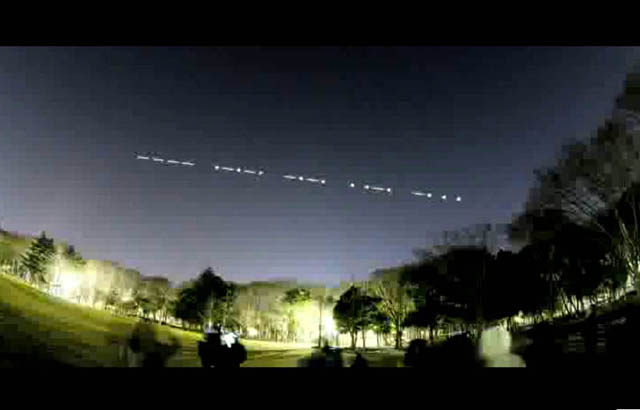
Un proyecto originario de Japon incluye la puesta en
orbita de un pequeño satelite destinado al estudio de las comunicaciones opticas
entre estaciones de navegacion espacial.
Se trata de un CUBESAT denominado FITSAT-1 (NIWAKA) http://www.fit.ac.jp/~tanaka/fitsat.shtml que utilizando la tecnica de LEDs emitira señales luminosas pulsantes de 200W en Codigo Morse las que se podrian visualizar durante el periodo nocturno.
Se trata de un CUBESAT denominado FITSAT-1 (NIWAKA) http://www.fit.ac.jp/~tanaka/fitsat.shtml que utilizando la tecnica de LEDs emitira señales luminosas pulsantes de 200W en Codigo Morse las que se podrian visualizar durante el periodo nocturno.
El Profesor Takushi Tanaka http://www.fit.ac.jp/~tanaka/ director
del proyecto, remarca que sera posible observar las señales de Morse a simple
vista sin necesidad de ninguna ayuda y que una vez en orbita el NIWAKA navegara
entre los 51 6 ° de latitud Sur y los 51 6° de latitud Norte.
El FITSAT-1 y la estacion terrena utilizando telescopios
especiales llevaran a cabo experimentos de comunicacion en Morse de alta
velocidad entre ambos puntos con 3 minutos de duracion.
Asi mismo se efectuara una experiencia de comunicaciones
en 5,8 GHz y llevara un beacon de 430 MHz. de CW comenzando en Morse
internacional con HI y una serie de 18 parametros de medicion y tambien emitira
en Packet AX25 a 1200 Baudios.
73,
Edwin - YV5EN (antes YV5HUJ)
lunes, 16 de julio de 2012
sábado, 7 de julio de 2012

miércoles, 6 de junio de 2012
viernes, 1 de junio de 2012
viernes, 4 de mayo de 2012
viernes, 13 de abril de 2012
lunes, 9 de abril de 2012
lunes, 2 de abril de 2012
martes, 27 de marzo de 2012
domingo, 25 de marzo de 2012

jueves, 22 de marzo de 2012
miércoles, 22 de febrero de 2012
lunes, 9 de enero de 2012
Space Station Flying by the Moon
Space Station Flying by the Moon
 |
| LA ESTACION ESPACIAL INTERNACIONAL - FOTO DE COLECCION DE LA NASA - TOMADA DESDE HOUSTON, TEXAS. U.S.A |
sábado, 7 de enero de 2012
INTERNATIONAL SPACE STATION PACKET FROM ANACO, VENEZUELA FJ79SK - YW6ISS -
 | |
| ESTACION ESPACIAL INTERNACIONAL - ORBITA # 75287 - DESDE ANACO, VENEZUELA FJ79sk - ESTACIONES ESCUCHADAS: CO6CBF Cienfuegos, Cuba - RS0ISS-4 Estación Espacial Internacional - YV5MM-10 (I-GATE) - 9Z4BJ-6 Trinidad - YV5MM - YW6ISS Anaco, Venezuela |
miércoles, 4 de enero de 2012
UNIDOS POR LA RADIO: PRIMER ANIVERSARIO GRUPO UNIDOS POR LA RADIO
UNIDOS POR LA RADIO: PRIMER ANIVERSARIO GRUPO UNIDOS POR LA RADIO: PRIMER ANIVERSARIO GRUPO UNIDOS POR LA RADIO BASES Conmemorando EL PRIMER ANIVERSARIO DEL GRUPO UNIDOS POR LA RADIO. Este grupo, agradec...
jueves, 22 de diciembre de 2011
martes, 20 de diciembre de 2011
miércoles, 14 de diciembre de 2011
FELIZ NAVIDAD Y AÑO NUEVO LES DESEAN KAREN Y NICOLE (NIETAS DE YV5MM)

MERRY CHRISTMAS AND HAPPY NEW YEAR 2012 DE KAREN & NICOLE GRANDDAUGTHERS OF YV5MM
domingo, 27 de noviembre de 2011
Próxima Expedición YX6AJ 2012 - ENERO 3 AL 6 2012 - SALTO ANGEL VENEZUELA
ANGEL FALLS - VENEZUELA - SUSPENDIDA POR CAUSA MAYOR HASTA NUEVO AVISO
lunes, 7 de noviembre de 2011
ALGUNAS FRECUENCIAS DE MODOS DIGITALES
CUADRO DE FRECUENCIAS
JT 65 HF
1.838 – 3.576 – 7.039 – 7.076 – 10.139 – 10.147 – 14.076 – 18.102 – 18.106 – 21.076 – 24.920 – 28.076 – 144.076 – 50.290 – ALL IN USB – See: hflink.com/jt65
SSTV
1.890 LSB – 3.845 LSB – 7.170 LSB – 10.132 USB (USE NARROW MODE MP73N) – 14.230 USB – 21.340 USB – 24.975 USB - 28.680 USB – 50.680 FM & 50.950 USB – 145.500 &145.600 FM – 144.550 USB – 223.850 FM – 430.950 USB or FM
WSPR
0.5024 – 1.8366 – 3.5926 – 5.2872 – 7.0386 – 10.1387 – 14.0956 – 18.1046 – 21.0946 – 24.9246 – 28.1246 – 50.293 – 70.0286 – 144.489 – ALL IN USB
NOOA
NOAA 15 137.6200 – NOAA 17 137.5000 – NOAA 18 137.9125 – NOOA 19 137.1999 AM RX
PSK31
1.838,150 – 3.580,150 – 7.035,150 – 10.140,150 – 14.070,150 – 18.100,150 – 21.080,150 – 24.920,150 – 28.120,150 USB
ROS
1.840 – 3.583 – 3.585 – 3.612 – 5.367 – 7.040 – 7.050 – 7.090 – 10.132 – 10.133 – 10.134 – 14.101 – 14.103 – 14.105 - 14.107 – 18.107 – 18.111 – 21.110 – 21.115 – 24.916 – 24.937 – 27.505 – 28.295 – 28.297 – 50.295 – 50.297 – 144.160 – 144.980 – 432-097
ALL IN USB – CHECK 2000 OR 500 IN THE PROGRAM FREQUENCY CHART
ACARS
131.525 – 131.550 – 131.725 AM
martes, 1 de noviembre de 2011
APRS SSID
-0 Your primary station usually fixed and message capable
-1 generic additional station, digi, mobile, wx, etc
-2 generic additional station, digi, mobile, wx, etc
-3 generic additional station, digi, mobile, wx, etc
-4 generic additional station, digi, mobile, wx, etc
-5 Other networks (Dstar, Iphones, Androids, Blackberry's etc)
-6 Special activity, Satellite ops, camping or 6 meters, etc
-7 walkie talkies, HT's or other human portable
-8 boats, sailboats, RV's or second main mobile
-9 Primary Mobile (usually message capable)
-10 internet, Igates, echolink, winlink, AVRS, APRN, etc
-11 balloons, aircraft, spacecraft, etc
-12 APRStt, DTMF, RFID, devices, one-way trackers*, etc
-13 Weather stations
-14 Truckers or generally full time drivers
-15 generic additional station, digi, mobile, wx, etc
martes, 25 de octubre de 2011
SATELITE NOAA 15 - 24 DE OCTUBRE DE 2011 - ORBITA # 69920 - ELEVACION 6.4 máx. a las 22:20 UTC - HURACAN RINA - IMAGEN CAPTADA DESDE ANACO FJ79sk EN EL ESTE DE VENEZUELA

HURACAN RINA CAPTADO POR YV5MM Manuel DESDE ANACO, VENEZUELA
miércoles, 19 de octubre de 2011
NOAA 15

 |
| Imágenes del Satélite NOAA 15, captadas por Manuel Mosquera YV5MM desde la grilla FJ79sk con equipo Kenwood TM-D700 y antena ELK5, rotor mixto azimuth y elevación desde la ciudad de Anaco FJ79sk, Venezuela. |
sábado, 15 de octubre de 2011
YW3Y - FOTOS - EXPEDICION DX EN EL ESTADO YARACUY
https://picasaweb.google.com/109104793217931977391/YW3YVIDEO1?authkey=Gv1sRgCP3Bj8_Wk7OfiAE
martes, 11 de octubre de 2011


JAMBOREE ON THE AIR - KF5AQG IS PLANNING TO BE ON THE AIR FROM THE INTERNATIONAL SPACE STATION AS NA1SS

If you are planning on participating in this weekend’s Jamboree On the Air (JOTA), take note: Astronaut Mike Fossum, KF5AQG, is planning to participate in JOTA from the International Space Station, using the call sign NA1SS. According to the AMSAT website, Fossum’s schedule is somewhat flexible on the weekends, but he will not be available for every pass. The typical crew work periods are 0800-1930 UTC, but they are sometimes available a bit later. When available, Fossum will be operating on the standard ISS frequencies. In the US and elsewhere in IARU Regions 2 and 3, the uplink is 144.49 MHz. In Region 1, the uplink is 145.200 MHz. The worldwide downlink for NA1SS is 145.800 MHz.
viernes, 30 de septiembre de 2011


miércoles, 28 de septiembre de 2011
AO-51 to support 54th Jamboree On The Air October 15-16
AO-51 to support 54th Jamboree On The Air
October 15-16
 The AO-51 Command Team is happy to announce support of the Scouting Jamboree On The Air (JOTA) during the weekend October 15-16, 2011. The AO-51 satellite will remain in its current configuration, with an understanding that contacts involving Scouts will be given first priority during this period.
The current operating mode of AO-51 is as follows:
- Uplink: 145.880 MHz FM (No PL tone)
- Downlink: 435.150 MHz FM
Visit the World Scouting Radio Library.
The Boy Scouts of America has several resources on-line for amateur radio stations participating in JOTA.
SATELITE AO 51 APOYARA EL JAMBOREE ON THE AIR - OCTOBER 15-16 2011

SATELITE AO 51
Estará en la frecuencia de subida: 145.880 MHz SIN TONO y 435.150 MHz en bajada
JAMBOREE ON THE AIR - OCT 15 16 2011
domingo, 25 de septiembre de 2011

jueves, 22 de septiembre de 2011
Wirelessness!: JT65 Articles from CQ Magazine
Wirelessness!: JT65 Articles from CQ Magazine: Last year (October & November 2010) I co-authored with Tomas NW7US a two-part article "Communicating Under the Noise" about JT65A on HF whi...
lunes, 19 de septiembre de 2011
DX Code Of Conduct
DX Code Of Conduct
(various languages inside)
- I will listen, and listen, and then listen again before calling.
- I will only call if I can copy the DX station properly.
- I will not trust the DX cluster and will be sure of the DX station's call sign before calling.
- I will not interfere with the DX station nor anyone calling and will never tune up on the DX frequency or in the QSX slot.
- I will wait for the DX station to end a contact before I call.
- I will always send my full call sign.
- I will call and then listen for a reasonable interval. I will not call continuously.
- I will not transmit when the DX operator calls another call sign, not mine.
- I will not transmit when the DX operator queries a call sign not like mine.
- I will not transmit when the DX station requests geographic areas other than mine.
- When the DX operator calls me, I will not repeat my call sign unless I think he has copied it incorrectly.
- I will be thankful if and when I do make a contact.
- I will respect my fellow hams and conduct myself so as to earn their respect.


DX Code Of Conduct
sábado, 10 de septiembre de 2011
MARIA EN EL CARIBE ESTA TARDE 10 09 2011

TROPICAL STORM MARIA IN THE CARIBBEAN THIS AFTERNOON SATURDAY SEPTEMBER 10th, 2011.
There is another depression following
martes, 30 de agosto de 2011


jueves, 25 de agosto de 2011
EA5GTU/P DESDE SU BALCON EN LA MANGA, Murcia, ESPAÑA con YV5MM MODO ROS
ROS with balcony antenna
By José Alberto Nieto Ros This antenna is used by EA5GTU/P during his holidays in La Manga (Spain). Besides of this antenna being low efficient on HF, he could contact with YV5MM (Venezuela) with ROS.

And this is an example of how you should not configure your Rig filter. In this case ROS frequencies below 1000Hz are lost in a Icom-7000. However the contact with YV5MM could be completed in the worst conditions.

lunes, 22 de agosto de 2011
HURACAN IRENE - NOAA 15
 |
| Huracán IRENE captada por YV5MM Manuel Mosquera, en la ciudad de Anaco, Venezuela en la grilla FJ79sk |
lunes, 15 de agosto de 2011

jueves, 11 de agosto de 2011


Noticias Científicas de la NASA - PERSEIDAS ESTE FIN DE SEMANA
Noticias Científicas de la NASA
http://ciencia.nasa.gov/ciencias-especiales/09aug_perseids2011/
La lluvia de meteoros Perseidas tendrá su máxima actividad este fin de semana, y la Estación Espacial Internacional participará en el espectáculo. Los observadores del cielo en muchos pueblos y ciudades de Estados Unidos podrán observar varios sobrevuelos de la EEI el 12 y 13 de agosto, justo cuando se espera que los meteoros Perseidas alcancen su máxima actividad bajo la luz de la Luna.
TODO EL REPORTAJE en http://ciencia.nasa.gov/ciencias-especiales/09aug_perseids2011/
miércoles, 10 de agosto de 2011
ARISSat-1 - Imágen recibida por YW6ISS en Anaco, Venezuela FJ79sk
 | |||||||
| LA IMÁGEN ORIGINAL CON SU FECHA DE CAPTACION (ARRIBA) |

LA IMAGEN DE ARRIBA PUBLICADA EN LA GALERIA DE AMSAT
domingo, 7 de agosto de 2011
ARISSat-1 ya tiene su nombre propio - Por YV5HUJ Edwin Rivera
En Orbitron ya aparece el ARISSat-1, identificado como RADIOSCAF-B.
Efectivamente, sigue la misma trayectoria de la ISS.
Veo estos próximos pases, hora YV:
06/08/2011 20:49:41 RADIOSCAF-B 208.3 0.0 ecl 2301 299.0 -35.1
06/08/2011 20:54:56 RADIOSCAF-B 125.5 50.6 ecl 481 299.6 -36.2
06/08/2011 21:00:08 RADIOSCAF-B 43.2 0.0 ecl 2282 300.4 -37.3
06/08/2011 20:54:56 RADIOSCAF-B 125.5 50.6 ecl 481 299.6 -36.2
06/08/2011 21:00:08 RADIOSCAF-B 43.2 0.0 ecl 2282 300.4 -37.3
06/08/2011 22:27:39 RADIOSCAF-B 271.9 0.0 ecl 2292 318.6 -54.1
06/08/2011 22:31:00 RADIOSCAF-B 311.9 4.4 ecl 1806 319.6 -54.7
06/08/2011 22:34:21 RADIOSCAF-B 352.1 0.0 ecl 2284 320.7 -55.2
06/08/2011 22:31:00 RADIOSCAF-B 311.9 4.4 ecl 1806 319.6 -54.7
06/08/2011 22:34:21 RADIOSCAF-B 352.1 0.0 ecl 2284 320.7 -55.2
Gracias,
Edwin - YV5HUJ
YV5JIP - Jose DÁgosto - Caracas - IMAGENES DE PRUEBA
 |
| El colega YV5JIP José DÁgosto ha comenzado a hacer sus pruebas con el programa WxtoIMg y se construyó su propia antena cuadrifilar con apoyo y ayuda de su esposa YY5DAL |
sábado, 6 de agosto de 2011
NOAA - TEMPORADA DE HURACANES EN EL ATLANTICO - IMPORTANTE INFORMACION
NOAA's Atlantic hurricane season update calls for increase in named storms
Forecasters have higher confidence for an active season
August 4, 2011

Tropical Storm Emily on August 3 from NOAA's geostationary satellite GOES-EAST.
Download here. (Credit: NOAA)
“The atmosphere and Atlantic Ocean are primed for high hurricane activity during August through October,” said Gerry Bell, Ph.D., lead seasonal hurricane forecaster at the Climate Prediction Center. “Storms through October will form more frequently and become more intense than we’ve seen so far this season.”
Key climate factors predicted in May continue to support an active season. These include: the tropical multi-decadal signal, which since 1995 has brought favorable ocean and atmospheric conditions, leading to more active seasons; exceptionally warm Atlantic Ocean temperatures (the third warmest on record); and the possible redevelopment of La Niña. Reduced vertical wind shear and lower air pressure across the tropical Atlantic also favor an active season.
Based on these conditions and on climate model forecasts, the confidence for an above-normal season has increased from 65 percent in May to 85 percent. Also, the expected number of named storms has increased from 12-18 in May to 14-19, and the expected number of hurricanes has increased from 6-10 in May to 7-10.
Across the entire Atlantic Basin for the whole season – June 1 to November 30 – NOAA’s updated seasonal outlook projects, with a 70 percent probability, a total of:
- 14 to 19 named storms (top winds of 39 mph or higher), including:
- 7 to 10 hurricanes (top winds of 74 mph or higher), of which:
- 3 to 5 could be major hurricanes (Category 3, 4 or 5; winds of at least 111 mph)
The Atlantic basin has already produced five tropical storms this season: Arlene, Bret, Cindy, Don and Emily. All eyes this week are on Emily, which continues to develop and move towards the United States.
The last hurricane to make landfall in the United States was Ike in 2008. Last year saw above-normal hurricane activity, but none made landfall in the United States. August through October are peak months of the Atlantic hurricane season, and FEMA urges people not to be lured into a false sense of security by the lack of hurricanes so far this year.
"It is still early in this hurricane season and we know it can take only one storm to devastate communities and families," said FEMA Deputy Administrator Rich Serino. "Many disasters come without warning, but that’s not the case with hurricanes. This is hurricane season, if you haven't already, now is the time to take a few simple steps to get you and your family prepared. Anyone can visit www.ready.gov to learn more."
Be prepared for the hurricane season with important information available online at hurricanes.gov/prepare and at FEMA’s ready.gov.
NOAA’s mission is to understand and predict changes in the Earth's environment, from the depths of the ocean to the surface of the sun, and to conserve and manage our coastal and marine resources. Join us on Facebook, Twitter and our other social media channels.


Suscribirse a:
Entradas (Atom)