****DEDICADA EXCLUSIVAMENTE A LA RADIOAFICION POR SATELITE DESDE VENEZUELA POR EL MUNDO Y PARA EL MUNDO Y A LA ****ENSEÑANZA Y DIVULGACION DEL AMBITO DIGITAL, SATELITAL Y LA ISS. GRUPO CREADO EL 26 DE DICIEMBRE DE 2009 EN YAHOO.GROUPS, PARA COMPARTIR CONOCIMIENTOS A LA RADIOAFICION. Autor: Manuel Mosquera Ramírez YV5MM Miembro del Radio Club Venezolano # 1347 desde el año 1970 y Asociación de Radioaficionados de Venezuela MIEMBRO PRINCIPAL desde el 18 de Mayo de 1970
WELCOME TO YV-SAT GROUP - BIENVENIDOS AL GRUPO YV-SAT
martes, 11 de octubre de 2011
JAMBOREE ON THE AIR - KF5AQG IS PLANNING TO BE ON THE AIR FROM THE INTERNATIONAL SPACE STATION AS NA1SS
If you are planning on participating in this weekend’s Jamboree On the Air (JOTA), take note: Astronaut Mike Fossum, KF5AQG, is planning to participate in JOTA from the International Space Station, using the call sign NA1SS. According to the AMSAT website, Fossum’s schedule is somewhat flexible on the weekends, but he will not be available for every pass. The typical crew work periods are 0800-1930 UTC, but they are sometimes available a bit later. When available, Fossum will be operating on the standard ISS frequencies. In the US and elsewhere in IARU Regions 2 and 3, the uplink is 144.49 MHz. In Region 1, the uplink is 145.200 MHz. The worldwide downlink for NA1SS is 145.800 MHz.
viernes, 30 de septiembre de 2011
miércoles, 28 de septiembre de 2011
AO-51 to support 54th Jamboree On The Air October 15-16
AO-51 to support 54th Jamboree On The Air
October 15-16
The current operating mode of AO-51 is as follows:
- Uplink: 145.880 MHz FM (No PL tone)
- Downlink: 435.150 MHz FM
Visit the World Scouting Radio Library.
The Boy Scouts of America has several resources on-line for amateur radio stations participating in JOTA.
SATELITE AO 51 APOYARA EL JAMBOREE ON THE AIR - OCTOBER 15-16 2011
SATELITE AO 51
Estará en la frecuencia de subida: 145.880 MHz SIN TONO y 435.150 MHz en bajada
JAMBOREE ON THE AIR - OCT 15 16 2011
domingo, 25 de septiembre de 2011
jueves, 22 de septiembre de 2011
Wirelessness!: JT65 Articles from CQ Magazine
Wirelessness!: JT65 Articles from CQ Magazine: Last year (October & November 2010) I co-authored with Tomas NW7US a two-part article "Communicating Under the Noise" about JT65A on HF whi...
lunes, 19 de septiembre de 2011
DX Code Of Conduct
DX Code Of Conduct
(various languages inside)
- I will listen, and listen, and then listen again before calling.
- I will only call if I can copy the DX station properly.
- I will not trust the DX cluster and will be sure of the DX station's call sign before calling.
- I will not interfere with the DX station nor anyone calling and will never tune up on the DX frequency or in the QSX slot.
- I will wait for the DX station to end a contact before I call.
- I will always send my full call sign.
- I will call and then listen for a reasonable interval. I will not call continuously.
- I will not transmit when the DX operator calls another call sign, not mine.
- I will not transmit when the DX operator queries a call sign not like mine.
- I will not transmit when the DX station requests geographic areas other than mine.
- When the DX operator calls me, I will not repeat my call sign unless I think he has copied it incorrectly.
- I will be thankful if and when I do make a contact.
- I will respect my fellow hams and conduct myself so as to earn their respect.
DX Code Of Conduct
sábado, 10 de septiembre de 2011
MARIA EN EL CARIBE ESTA TARDE 10 09 2011
TROPICAL STORM MARIA IN THE CARIBBEAN THIS AFTERNOON SATURDAY SEPTEMBER 10th, 2011.
There is another depression following
martes, 30 de agosto de 2011
jueves, 25 de agosto de 2011
EA5GTU/P DESDE SU BALCON EN LA MANGA, Murcia, ESPAÑA con YV5MM MODO ROS
ROS with balcony antenna
By José Alberto Nieto Ros This antenna is used by EA5GTU/P during his holidays in La Manga (Spain). Besides of this antenna being low efficient on HF, he could contact with YV5MM (Venezuela) with ROS.And this is an example of how you should not configure your Rig filter. In this case ROS frequencies below 1000Hz are lost in a Icom-7000. However the contact with YV5MM could be completed in the worst conditions.
lunes, 22 de agosto de 2011
HURACAN IRENE - NOAA 15
lunes, 15 de agosto de 2011
jueves, 11 de agosto de 2011
Noticias Científicas de la NASA - PERSEIDAS ESTE FIN DE SEMANA
Noticias Científicas de la NASA
http://ciencia.nasa.gov/ciencias-especiales/09aug_perseids2011/
La lluvia de meteoros Perseidas tendrá su máxima actividad este fin de semana, y la Estación Espacial Internacional participará en el espectáculo. Los observadores del cielo en muchos pueblos y ciudades de Estados Unidos podrán observar varios sobrevuelos de la EEI el 12 y 13 de agosto, justo cuando se espera que los meteoros Perseidas alcancen su máxima actividad bajo la luz de la Luna.
TODO EL REPORTAJE en http://ciencia.nasa.gov/ciencias-especiales/09aug_perseids2011/
miércoles, 10 de agosto de 2011
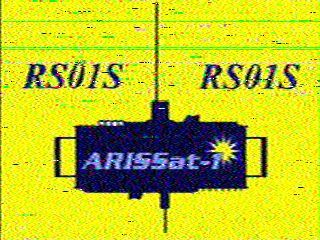
ARISSat-1 - Imágen recibida por YW6ISS en Anaco, Venezuela FJ79sk
domingo, 7 de agosto de 2011
ARISSat-1 ya tiene su nombre propio - Por YV5HUJ Edwin Rivera
En Orbitron ya aparece el ARISSat-1, identificado como RADIOSCAF-B.
Efectivamente, sigue la misma trayectoria de la ISS.
Veo estos próximos pases, hora YV:
06/08/2011 20:49:41 RADIOSCAF-B 208.3 0.0 ecl 2301 299.0 -35.1
06/08/2011 20:54:56 RADIOSCAF-B 125.5 50.6 ecl 481 299.6 -36.2
06/08/2011 21:00:08 RADIOSCAF-B 43.2 0.0 ecl 2282 300.4 -37.3
06/08/2011 20:54:56 RADIOSCAF-B 125.5 50.6 ecl 481 299.6 -36.2
06/08/2011 21:00:08 RADIOSCAF-B 43.2 0.0 ecl 2282 300.4 -37.3
06/08/2011 22:27:39 RADIOSCAF-B 271.9 0.0 ecl 2292 318.6 -54.1
06/08/2011 22:31:00 RADIOSCAF-B 311.9 4.4 ecl 1806 319.6 -54.7
06/08/2011 22:34:21 RADIOSCAF-B 352.1 0.0 ecl 2284 320.7 -55.2
06/08/2011 22:31:00 RADIOSCAF-B 311.9 4.4 ecl 1806 319.6 -54.7
06/08/2011 22:34:21 RADIOSCAF-B 352.1 0.0 ecl 2284 320.7 -55.2
Gracias,
Edwin - YV5HUJ
YV5JIP - Jose DÁgosto - Caracas - IMAGENES DE PRUEBA
sábado, 6 de agosto de 2011
NOAA - TEMPORADA DE HURACANES EN EL ATLANTICO - IMPORTANTE INFORMACION
NOAA's Atlantic hurricane season update calls for increase in named storms
Forecasters have higher confidence for an active season
August 4, 2011
Tropical Storm Emily on August 3 from NOAA's geostationary satellite GOES-EAST.
Download here. (Credit: NOAA)
“The atmosphere and Atlantic Ocean are primed for high hurricane activity during August through October,” said Gerry Bell, Ph.D., lead seasonal hurricane forecaster at the Climate Prediction Center. “Storms through October will form more frequently and become more intense than we’ve seen so far this season.”
Key climate factors predicted in May continue to support an active season. These include: the tropical multi-decadal signal, which since 1995 has brought favorable ocean and atmospheric conditions, leading to more active seasons; exceptionally warm Atlantic Ocean temperatures (the third warmest on record); and the possible redevelopment of La Niña. Reduced vertical wind shear and lower air pressure across the tropical Atlantic also favor an active season.
Based on these conditions and on climate model forecasts, the confidence for an above-normal season has increased from 65 percent in May to 85 percent. Also, the expected number of named storms has increased from 12-18 in May to 14-19, and the expected number of hurricanes has increased from 6-10 in May to 7-10.
Across the entire Atlantic Basin for the whole season – June 1 to November 30 – NOAA’s updated seasonal outlook projects, with a 70 percent probability, a total of:
- 14 to 19 named storms (top winds of 39 mph or higher), including:
- 7 to 10 hurricanes (top winds of 74 mph or higher), of which:
- 3 to 5 could be major hurricanes (Category 3, 4 or 5; winds of at least 111 mph)
The Atlantic basin has already produced five tropical storms this season: Arlene, Bret, Cindy, Don and Emily. All eyes this week are on Emily, which continues to develop and move towards the United States.
The last hurricane to make landfall in the United States was Ike in 2008. Last year saw above-normal hurricane activity, but none made landfall in the United States. August through October are peak months of the Atlantic hurricane season, and FEMA urges people not to be lured into a false sense of security by the lack of hurricanes so far this year.
"It is still early in this hurricane season and we know it can take only one storm to devastate communities and families," said FEMA Deputy Administrator Rich Serino. "Many disasters come without warning, but that’s not the case with hurricanes. This is hurricane season, if you haven't already, now is the time to take a few simple steps to get you and your family prepared. Anyone can visit www.ready.gov to learn more."
Be prepared for the hurricane season with important information available online at hurricanes.gov/prepare and at FEMA’s ready.gov.
NOAA’s mission is to understand and predict changes in the Earth's environment, from the depths of the ocean to the surface of the sun, and to conserve and manage our coastal and marine resources. Join us on Facebook, Twitter and our other social media channels.
viernes, 5 de agosto de 2011
jueves, 4 de agosto de 2011
YV6ALX - LUIS LEON - EL TIGRE, ESTADO ANZOATEGUI - ARISSat-1 - Segundo Pase de hoy 4 de Agosto en la mañana
ARISSat-1 SSTV SEGUNDO PASE / 04-08-2011 10:30 HLV
Frx: 145.950 Mhz. / Ant.: VHF Vertical / Rig: Kenwood TM-732A
Sofware: MMsstv Version 1.08
ARISSat-1 - Página de información diaria
Página de información diaria en éste enlace:
http://www.arissat1.org/v3/
ARISSat-1 / REPORTE DE YV5DSL- José Morales - CARACAS
Anexo a todos lo siguiente:
En FM podran recibir los ID de Voz y SSTV, en CW! y CW2 es el beacon, puede ser que escuchen en uno u otro esto indica el modo de BPSK que trasmite deben colocar su receptor en USB y colocar la señal en la linea de descifrar para esto deben tener el programa instalado y la tarjeta en STAR para que en la pantalla principal vean la telemetria y los valores en la siguiente pantalla, en el descifrador de CW del mismo programa veran la identoificacion en CW, Suerte a todos ahora hay un buen pase y a toda potencia, el transponde aparentemente no funciona no se sabe nada de la antena de uhf..
Saludos de José YV5DSL Saludos.
Anexo dos archivos de la grabacion realizada durante el periodo de prueba del satelite ARISSAT-1 que sera lanzado desde la ISS el proximo dia 3 de agosto, grabacion obtenida desde mi estacion son aprox 40 seg y un periodo de 2 min de descanso en cada orbita por lo que en un pase normal solo dos grabaciones se pueden realizar. El ARISSAT-1 se encontraba dentro de la ISS, varios paises reportaron las trasmisiones, todo indica que este satelite nos brindara gratas sorpresas desde su lanzamiento
Jose
YV5DSL
__._,_.___
Archivo 2 de 2
ARISSat-1 / REPORTE DE YY7PMG - Pedro González - ISLA DE MARGARITA
Saludos colegas. acabo de copiar al ARISSat-1 aca en la isla; tambien escuche la transmision de sstv pero ya estaba muy bajo por lo que la decodificacion no esta muy buena solo de adjunto la grabacion de la transmision.
73´s de YY7PMG - Pedro G. desde San Sebastian - Tacarigua, Isla de Margarita.
loc: FK81bb.
73´s de YY7PMG - Pedro G. desde San Sebastian - Tacarigua, Isla de Margarita.
loc: FK81bb.
__._,_.___
Archivos adjuntos de PEDRO GONZALEZ GONZALEZ
Archivo 1 de 1
miércoles, 3 de agosto de 2011
martes, 2 de agosto de 2011
Russian Spacewalkers to Move Cargo Boom, Deploy Ham Radio Satellite
07.29.11
› View hi-res image
Two Russian cosmonauts will leave the confines of the International Space Station on Aug.3 to move a cargo boom from one airlock to another, install a prototype laser communications system and deploy an amateur radio micro-satellite.
Expedition 28 Flight Engineers Sergei Volkov and Alexander Samokutyaev are scheduled to venture outside the Pirs airlock at 10:30 a.m. EDT Wednesday to begin the six-hour excursion. Both spacewalkers will wear Russian Orlan-MK spacesuits. Coverage of the spacewalk will be broadcast live on NASA Television beginning at 10 a.m. EDT.
Volkov, making his third spacewalk, and Samokutyaev, making his first, will both wear spacesuits marked with blue stripes. Volkov’s previous two spacewalks occurred while he was Expedition 17 commander in 2008.
During the spacewalk, Commander Andrey Borisenko and NASA Flight Engineer Ron Garan will close the hatches on the Poisk docking module, which is opposite the Pirs airlock, and seal the hatches between Zvezda and Poisk. This gives them access to their Soyuz 26 spacecraft, protects against the unlikely possibility of a sudden station depressurization and allows the forward transfer compartment of Zvezda to be used as a backup airlock. Flight Engineers Mike Fossum of NASA, and Satoshi Furukawa of the Japan Aerospace Exploration Agency, will be in the U.S. segment and will have access to their Soyuz 27 spacecraft, which is docked to the Rassvet module.
The duo’s first task will be to deploy a boxy, 57-pound satellite, called alternately ARISSat-1 and Radioskaf-V, which is the prototype test flight of a proposed series of educational satellites being developed in a partnership with the Radio Amateur Satellite Corp. (AMSAT), the NASA Office of Education ISS National Lab Project, the Amateur Radio on ISS (ARISS) working group and RSC-Energia.
The ARISSat design can carry up to four student experiments and the data from these experiments will be transmitted to the ground via an amateur radio link. This prototype ARISSat-1 carries one student experiment, a pressure sensor built at Kursk University in Russia, to measure atmospheric pressure for the lifetime of the satellite.
› View hi-res image
In addition to transmitting student experiment data, ARISSat-1 will transmit still-frame video Earth views from four onboard cameras, commemorative greetings in the native languages from students around the world, including messages to commemorate the 50th anniversary of the launch of Russian cosmonaut Yuri Gagarin as the first human in space. The satellite, which uses off-the-shelf equipment and software provided by AMSAT, also features a Morse code tracking beacon and will function as a space communications utility for use by “ham” radio operators world-wide.
More information on tracking ARISSat-1 decoding its telemetry visit the AMSAT and ARISSat-1 websites:
http://www.arissat1.org/v3/
http://www.amsat.org/amsat-new/
Their next job will be to install a barbecue grill-shaped experiment to test the use of a laser-based system for high-speed transmissions at up to 100 megabytes a second to the Earth from Russian science experiments. The system will be installed on a universal work platform outside the Zvezda service module hull just behind its solar arrays.
After that, they’ll take photographs of a nearby antenna that has been showing signs of degraded performance. The imagery will be used to help engineers on the ground find the root cause of the antenna’s problem.
Next, they’ll retrieve an antenna that was used for docking of the Poisk module when it arrived at the station in November 2009. The antenna is no longer needed and will be brought back inside the station.
Then it is on to the major objective of the spacewalk, the move of the telescoping STRELA-1 cargo boom from the Pirs docking compartment to the Poisk docking compartment. The task is expected to take nearly three hours to complete, and will involve the use of the STRELA-2 boom, with its base attached to Pirs. At the completion of the task, STRELA-1 will be ready for use from Poisk, and STRELA-2 will remain on Pirs. The cargo booms extend somewhat like a fishing rod, and can be used to help move massive components around the outside of the Russian segment of the space station.
Once the boom relocation is complete, the spacewalkers will retrieve an experiment known as Biorisk from the airlock, and install it on a handrail outside the Pirs module. Biorisk is short for the Influence of Factors of the Space Environment on the Condition of the System of Microorganisms-Hosts Relating to the Problem of Environmental Safety of Flight Techniques and Planetary Quarantine. The experiment will look at the effects of bacteria and fungus on structural materials used in spacecraft construction with a focus on how solar activity may affect the growth of these microbes.
With all tasks complete, Volkov and Samokutyaev will take some final photographs, reenter the Pirs airlock and end their spacewalk.
The next Russian spacewalk is planned for February 2012, when the Expedition 30 crew will be in orbit aboard the station.
INFORMACION IMPORTANTE DEL COLEGA M5AKA TREVOR HAWKINS , Directivo de AMSAT U.K. - REINO UNIDO
Following the successful tests last weekend the latest Amateur Radio
satellite ARISSat-1 will be deployed from the ISS, Aug 3, during
a space walk that commences at 1400 GMT. AMSAT-NA have created a
special page with information on how to receive the satellite.
ARISSat-1 can transmit Slow Scan TV pictures from its 4 onboard cameras and it is hoped a picture of the actual deployment wil be transmitted. ARISSat-1 also has CW and BPSK beacons and a cross band 435/145 MHz linear transponder for SSB/CW working. The 145.950 MHz SSTV FM signal should be receivable using simple equipment such as a 2m FM handheld with a quater wave whip.
Read the new AMSAT-NA guide - ARISSat How To: Operating Tips,
Pointers, Downloads
http://www.amsat.org/amsat-new/ARISSat/ARISSatHowTo.php
You can watch the deployment of ARISSat-1 live on NASA TV, coverage
starts at 1400 GMT (1500 BST)
http://www.nasa.gov/ntv
It is believed the first pass receivable in the British Isles will be 23:46:34 GMT on August 3.
Online Satellite Pass Predictions, select ARISSat-1
http://www.amsat.org/amsat-new/tools/predict/
Read the ARISSat-1 article from QST at
http://web.me.com/clintbradford/Work-Sat/ARISSat-1_files/QST-ARISSat1.pdf
Follow ARISSat-1 on Twitter:
http://twitter.com/#!/arissat1
In USA you can also text 'follow Arissat1' to 40404 with your cell
phone. (leave off the quotes).
Free Slow Scan TV Software MMSSTV uses your PCs Soundcard
http://mmhamsoft.amateur-radio.ca/
IZ8BLY Vox Recoder, enables you to record the signals from the
ARISSat-1 on 145.950 MHz FM while you're at work
http://antoninoporcino.xoom.it/VoxRecorder/
The latest telemetry can be seen live on your computer or cell phone at
http://www.arissattlm.org/mobile
Download the Windows and Mac versions of the ARISSatTLM free ground
station soundcard demodulator and display software:
http://www.arissattlm.org/
The ARISSatTLM software user guide is available:
http://tinyurl.com/42uhtyf (amsat.org)
Get your color ARISSat-1 Frequency Guide:
http://tinyurl.com/4t497t2 (amsat.org)
AMSAT-UK publishes a colour A4 newsletter, OSCAR News, which is full
of Amateur Satellite information.
Join online at http://tinyurl.com/JoinAMSAT-UK
A sample edition of the newsletter can be seen at
http://www.uk.amsat.org/on_193_final.pdf
----
73 Trevor M5AKA
satellite ARISSat-1 will be deployed from the ISS, Aug 3, during
a space walk that commences at 1400 GMT. AMSAT-NA have created a
special page with information on how to receive the satellite.
ARISSat-1 can transmit Slow Scan TV pictures from its 4 onboard cameras and it is hoped a picture of the actual deployment wil be transmitted. ARISSat-1 also has CW and BPSK beacons and a cross band 435/145 MHz linear transponder for SSB/CW working. The 145.950 MHz SSTV FM signal should be receivable using simple equipment such as a 2m FM handheld with a quater wave whip.
Read the new AMSAT-NA guide - ARISSat How To: Operating Tips,
Pointers, Downloads
http://www.amsat.org/amsat-new/ARISSat/ARISSatHowTo.php
You can watch the deployment of ARISSat-1 live on NASA TV, coverage
starts at 1400 GMT (1500 BST)
http://www.nasa.gov/ntv
It is believed the first pass receivable in the British Isles will be 23:46:34 GMT on August 3.
Online Satellite Pass Predictions, select ARISSat-1
http://www.amsat.org/amsat-new/tools/predict/
Read the ARISSat-1 article from QST at
http://web.me.com/clintbradford/Work-Sat/ARISSat-1_files/QST-ARISSat1.pdf
Follow ARISSat-1 on Twitter:
http://twitter.com/#!/arissat1
In USA you can also text 'follow Arissat1' to 40404 with your cell
phone. (leave off the quotes).
Free Slow Scan TV Software MMSSTV uses your PCs Soundcard
http://mmhamsoft.amateur-radio.ca/
IZ8BLY Vox Recoder, enables you to record the signals from the
ARISSat-1 on 145.950 MHz FM while you're at work
http://antoninoporcino.xoom.it/VoxRecorder/
The latest telemetry can be seen live on your computer or cell phone at
http://www.arissattlm.org/mobile
Download the Windows and Mac versions of the ARISSatTLM free ground
station soundcard demodulator and display software:
http://www.arissattlm.org/
The ARISSatTLM software user guide is available:
http://tinyurl.com/42uhtyf (amsat.org)
Get your color ARISSat-1 Frequency Guide:
http://tinyurl.com/4t497t2 (amsat.org)
AMSAT-UK publishes a colour A4 newsletter, OSCAR News, which is full
of Amateur Satellite information.
Join online at http://tinyurl.com/JoinAMSAT-UK
A sample edition of the newsletter can be seen at
http://www.uk.amsat.org/on_193_final.pdf
----
73 Trevor M5AKA
lunes, 1 de agosto de 2011
YV5DSL - JOSE MORALES DESDE CARACAS, VENEZUELA - Grabaciones de ARISSat-1
Saludos.
Anexo dos archivos de la grabacion realizada durante el periodo de prueba del satelite ARISSAT-1 que sera lanzado desde la ISS el proximo dia 3 de agosto, grabacion obtenida desde mi estacion son aprox 40 seg y un periodo de 2 min de descanso en cada orbita por lo que en un pase normal solo dos grabaciones se pueden realizar. El ARISSAT-1 se encontraba dentro de la ISS, varios paises reportaron las trasmisiones, todo indica que este satelite nos brindara gratas sorpresas desde su lanzamiento
Jose
YV5DSL
__._,_.___
Archivo 2 de 2
domingo, 31 de julio de 2011
ARISSat-1 - Horario de desplazamiento
Submitted by: Alex Glinski, VK5ALX, Australia
Acquired: 2011-07-31 10:50:00
![]() |
| LOGOTIPO DEL SATELITE ARISSat-1 |
En la manana de hoy, en el pase de las 10:18 HLV / 14:48 GMT se escucho aca en Anaco en FJ79sk con una señal 5 9 en 437.550 MHz, una voz de mujer identificando RS01S a ARISSat-1 adentro de la Estacion Espacial Internacional. Para esta
hora estaba planificado que las pruebas terminarían.
El desplazamiento del satelite ARISSat-1 se efectuara el Miercoles 3 de Agosto y seran transmitidos por NASA TELEVISION. Me comprometo a publicar el video en esta pagina y en el BLOG del Radio Club Venezolano / Anaco, Y en el del grupo YV-SAT
HORARIO
Miercoles 3 de Agosto de 2011 desde las 14 horas UTC
14:30 UTC - Se abren las compuertas
14:46 UTC - Sacan ARISSat-1 de la ISS y la aseguran a las escaleras
14:52 UTC - Remueven las cubiertas de los paneles solares
15:07 UTC - Llevan a ARISSat-1 a su sitio de desplazamiento. Activan los interruptores de potencia y cronologicos 1 y 2
y LANZAN A ARISSat-1 al espacio
73 de Manuel YV5MM
Se utilizo un Radio Kenwood TS 2000 X y una antena ELK 2M/440 L
Rotores azmimutal y de elevación 15 mts de altura
--
hora estaba planificado que las pruebas terminarían.
El desplazamiento del satelite ARISSat-1 se efectuara el Miercoles 3 de Agosto y seran transmitidos por NASA TELEVISION. Me comprometo a publicar el video en esta pagina y en el BLOG del Radio Club Venezolano / Anaco, Y en el del grupo YV-SAT
HORARIO
Miercoles 3 de Agosto de 2011 desde las 14 horas UTC
14:30 UTC - Se abren las compuertas
14:46 UTC - Sacan ARISSat-1 de la ISS y la aseguran a las escaleras
14:52 UTC - Remueven las cubiertas de los paneles solares
15:07 UTC - Llevan a ARISSat-1 a su sitio de desplazamiento. Activan los interruptores de potencia y cronologicos 1 y 2
y LANZAN A ARISSat-1 al espacio
73 de Manuel YV5MM
Se utilizo un Radio Kenwood TS 2000 X y una antena ELK 2M/440 L
Rotores azmimutal y de elevación 15 mts de altura
--
GRUPO YV-SAT ** Enseñanza Satelital
RADIOAFICIONADOS POR SATELITE
P.O. Box # 73 & 88
P.O. Box # 73 & 88
Anaco 6003, Anzoátegui, Venezuela
http://yv-sat.blogspot.com/
Copyright © 2011 Yahoo! Inc. All rights reserved.
Fundado el 26 de Diciembre de 2009 -
http://yv-sat.blogspot.com/
Copyright © 2011 Yahoo! Inc. All rights reserved.
Fundado el 26 de Diciembre de 2009 -
martes, 26 de julio de 2011
viernes, 15 de julio de 2011
PRUEBAS DE ARISSAT-1 EL 30 DE JULIO A LAS 19:15 UTC ***ACTUALIZADO***
Muy buenas tardes a todos los colegas radioaficionados
Durante una teleconferencia internacional de ARISS, Sergey Samburov RV3DR indica que el Satélite ARISSat-1, actualmente abordo de la ISS, tendrá cargadas sus baterías para fin del mes de Julio de 2011.
Según Samburov las pruebas serán relizadas con el Satélite abordo de la ISS, caso de algún ajuste necesario, iniciándose a las 19:15 UTC del 30 de Julio de 2011 hasta las 12:00 o 14:00 UTC del 31 de Julio de 2011.
El satélite transmitirá en la frecuencia de 437.550 MHz. Ya publicamos la tabla de frecuencia, pero en correo aparte se repetirá para que aquellos que no la observaron, la guarden como referencia por la diversidad de frecuencias y modos.
Estamos atentos para el desplazamiento de éste nuevo satélite desde la ISS que será en Agosto de 2011.
73 de Manuel YV5MM.
ARISSat-1/KEDR Deployment Timeline
During the July 13, 2011 International ARISS teleconference Sergey Samburov, RV3DR announced that the ARISSat-1/KEDR battery will be charged in late July. A test of the system will be conducted on the ISS from 1915 UTC July 30 to about 1200-1400 UTC July 31. The standard ARISSat-1/KEDR 2m downlink band plan should be transmitted. The satellite FM signal will also be downlinked on 437.55 MHz.
During the test ARISSat-1/KEDR will be in LOW power mode, this means that it will transmit about 40 seconds and then shut down for 2 minutes and then transmit for 40 seconds. The linear transponder mode will be activated once the satellite is deployed.
ARISSat-1/KEDR Project Manager Gould Smith, WA4SXM said the preparation procedures include the battery being charged and assembled into the satellite. Gould, along with ARISS Hardware Engineer Lou McFadin, W5DID participated in an earlier teleconference call with NASA to review the Roscosmos EVA procedures for the release of ARISSat-1/KEDR during Russian EVA 29. The procedures to remove the protective quilts from the solar cells and turning on the safety switches prior to deployment were reviewed during this call.
Gould summarized, "As of July 16 we are looking at an August 3, 2011 date for EVA 29 and the ARISSat-1/KEDR deployment, subject to change due to ISS schedules. During our review we noted the ARISSat/KEDR deployment is the first task of the EVA, so it will occur fairly soon after the EVA begins. We will let everyone know more as we know more."
145.950 MHz FM Downlink
FM transmissions will cycle between a voice ID as RS01S, select telemetry values, 24 international greeting messages in 15 languages and SSTV images. One of the messages will be a conversation between Yuri Gagarin and ground control.
435 MHz - 145 MHz Linear Transponder
The linear transponder will operate in Mode U/V (70 cm Up, 2m Down). It is an 16 KHz wide inverting passband and the convention will be to TX LSB on the 435 MHz uplink and RX USB on the 145 MHz downlink. This mode is designed to work with low power transmitters and omni antenna.
145.919 MHz/145.939 MHz CW Beacons
The CW transmissions will be callsign ID RS01S, select telemetry, and callsigns of people actively involved with the ARISS program.
145.920 MHz SSB BPSK-1000 Telemetry
The BPSK transmissions will feature a new 1kBPSK protocol developed by Phil Karn, KA9Q to be readable in low signal level conditions. The BPSK data will transmit satellite telemetry. When the CW2 beacon on 145.919 MHz is active this indicates that the BPSK-1000 format is being transmitted. If the CW1 beacon on 145.939 MHz is active this indicates the backup of BPSK-400 format is being transmitted.
Durante una teleconferencia internacional de ARISS, Sergey Samburov RV3DR indica que el Satélite ARISSat-1, actualmente abordo de la ISS, tendrá cargadas sus baterías para fin del mes de Julio de 2011.
Según Samburov las pruebas serán relizadas con el Satélite abordo de la ISS, caso de algún ajuste necesario, iniciándose a las 19:15 UTC del 30 de Julio de 2011 hasta las 12:00 o 14:00 UTC del 31 de Julio de 2011.
El satélite transmitirá en la frecuencia de 437.550 MHz. Ya publicamos la tabla de frecuencia, pero en correo aparte se repetirá para que aquellos que no la observaron, la guarden como referencia por la diversidad de frecuencias y modos.
Estamos atentos para el desplazamiento de éste nuevo satélite desde la ISS que será en Agosto de 2011.
73 de Manuel YV5MM.
ARISSat-1/KEDR Deployment Timeline
Driven by ISS Schedules
ARISSat-1/KEDR On Air Test Begins July 30
During the test ARISSat-1/KEDR will be in LOW power mode, this means that it will transmit about 40 seconds and then shut down for 2 minutes and then transmit for 40 seconds. The linear transponder mode will be activated once the satellite is deployed.
ARISSat-1/KEDR Project Manager Gould Smith, WA4SXM said the preparation procedures include the battery being charged and assembled into the satellite. Gould, along with ARISS Hardware Engineer Lou McFadin, W5DID participated in an earlier teleconference call with NASA to review the Roscosmos EVA procedures for the release of ARISSat-1/KEDR during Russian EVA 29. The procedures to remove the protective quilts from the solar cells and turning on the safety switches prior to deployment were reviewed during this call.
EVA for ARISSat-1/KEDR Deployment Planned for August 3
Gould summarized, "As of July 16 we are looking at an August 3, 2011 date for EVA 29 and the ARISSat-1/KEDR deployment, subject to change due to ISS schedules. During our review we noted the ARISSat/KEDR deployment is the first task of the EVA, so it will occur fairly soon after the EVA begins. We will let everyone know more as we know more."
145.950 MHz FM Downlink
FM transmissions will cycle between a voice ID as RS01S, select telemetry values, 24 international greeting messages in 15 languages and SSTV images. One of the messages will be a conversation between Yuri Gagarin and ground control.
435 MHz - 145 MHz Linear Transponder
The linear transponder will operate in Mode U/V (70 cm Up, 2m Down). It is an 16 KHz wide inverting passband and the convention will be to TX LSB on the 435 MHz uplink and RX USB on the 145 MHz downlink. This mode is designed to work with low power transmitters and omni antenna.
145.919 MHz/145.939 MHz CW Beacons
The CW transmissions will be callsign ID RS01S, select telemetry, and callsigns of people actively involved with the ARISS program.
145.920 MHz SSB BPSK-1000 Telemetry
The BPSK transmissions will feature a new 1kBPSK protocol developed by Phil Karn, KA9Q to be readable in low signal level conditions. The BPSK data will transmit satellite telemetry. When the CW2 beacon on 145.919 MHz is active this indicates that the BPSK-1000 format is being transmitted. If the CW1 beacon on 145.939 MHz is active this indicates the backup of BPSK-400 format is being transmitted.
- Windows ARISSatTLM ground station soundcard demodulator and display software
- Mac ARISSatTLM software
- ARISSatTLM software user guide
- SSTV Software
- MMSSTV (Windows)
- Ham Radio Deluxe (Windows)
- MultiScan (Mac)
- Color ARISSat-1/KEDR Frequency Guide
- 2010 Symposium ARISSat-1/KEDR Presentation Slides (~1MB)
- Dayton 2011 ARISSat-1/KEDR Presentation Slides
- Follow ARISSat-1/RadioSkaf-V on Twitter
- In USA you can also text follow Arissat1 to 40404 with your cell phone.
martes, 12 de julio de 2011
ARISSat-1 Project - Proyecto ARISSat-!
ARISSat-1 Project
The ARISSat-1 amateur radio experiment is on board the International Space Station. ARISSat-1 is awaiting the next EVA to be manually deployed. EVA 29 is currently scheduled for early August 2011. The satellite will be manually deployed and begin transmissions 15 minutes after the control panel switches are thrown. NASA television is expected to broadcast this EVA and satellite release.
Suscribirse a:
Entradas (Atom)